
Laser Screed FM2 Flooring
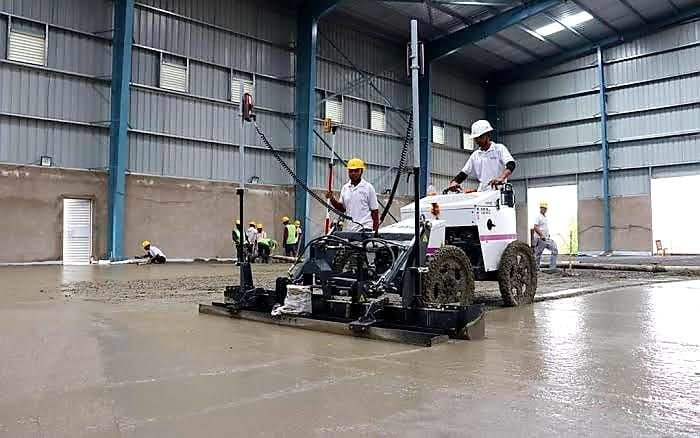
Laser-guided screeding places and levels large floor areas with automatic height control — the usual method for big, flat warehouse floors.
Concrete flooring, surface finishing, slab cutting and waterproofing — each specified for the load, traffic and exposure your floor will actually face.
Choose a service for the full detail — what it is, how we carry it out, the checks involved, and answers to common questions.
Laser-guided screeding places and levels large floor areas with automatic height control — the usual method for big, flat warehouse floors.
A chemical densifier reacts inside the concrete and hardens the surface, so the slab stops shedding dust — with no coating on top to peel or wear through.
A densifier hardens the slab so it stops dusting; diamond polishing takes it further to a hard, reflective, easy-clean finish.
Vibrating truss screeds strike off and compact wide concrete pours in one controlled pass, holding accurate levels over long spans.
Diamond saw cutting for control joints, slab openings, trenches and controlled demolition — clean, square cuts without breaking what stays.
Membrane, coating, crystalline and injection systems chosen by area — terraces, basements, wet areas and tanks — starting with finding the leak.
Seamless resin floors that resist chemicals and abrasion and clean easily — for production, pharmaceutical, food and commercial spaces.
Large steel-fibre-reinforced panels with only a few armoured construction joints — far fewer edges to break, repair or jolt forklifts.
Surplus water is drawn out of freshly laid concrete under vacuum, giving a denser, harder and more wear-resistant industrial floor.
Laser screed FM2 flooring uses a laser-guided screeding machine to place, compact and level concrete across large open areas, adjusting its screed head automatically to a laser reference. It is the usual method for big warehouse and factory floors that need consistent levels, and is the normal way to reach the FM2 free-movement flatness class.

Densification dust proofing treats a dusting concrete floor at its cause instead of covering it over. A liquid densifier is applied to the prepared slab, draws into the pore structure and reacts chemically inside it, leaving the worked surface harder, tighter and far less willing to release dust. Nothing is left sitting on top of the floor, so there is no film to blister, peel or wear through — and the treatment works on a slab cast last month or twenty years ago.
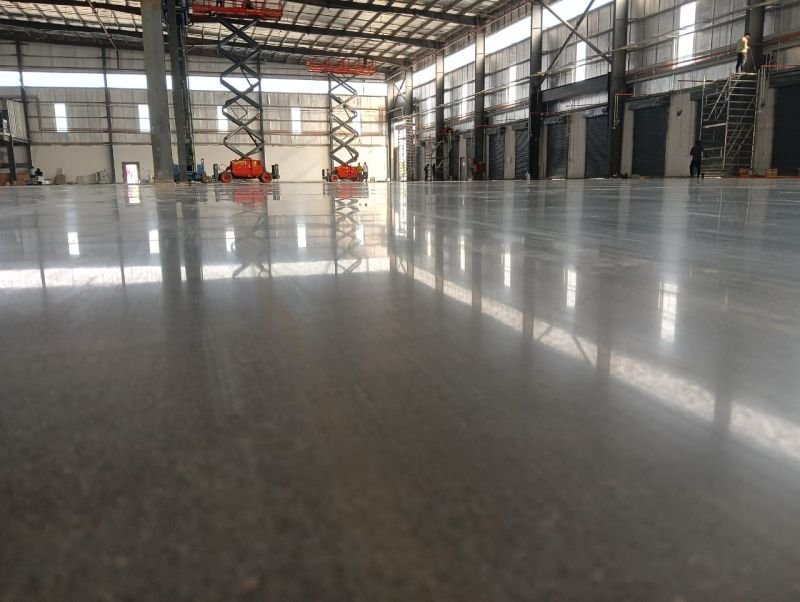
Concrete floor polishing grinds a slab with progressively finer diamond tools, densifies it part-way through and refines it until it reaches the agreed sheen. The finish is the concrete itself rather than a coating laid over it, so there is nothing on top to peel, blister or wear through. It works on new slabs and on worn existing floors, and it leaves a surface that is hard, dust-free and quick to clean.
A truss screed levels and compacts a wide concrete pour in a single controlled pass. We use vibrating truss screeds to lay large industrial and commercial floors to consistent levels, usually followed by vacuum dewatering and power trowelling.
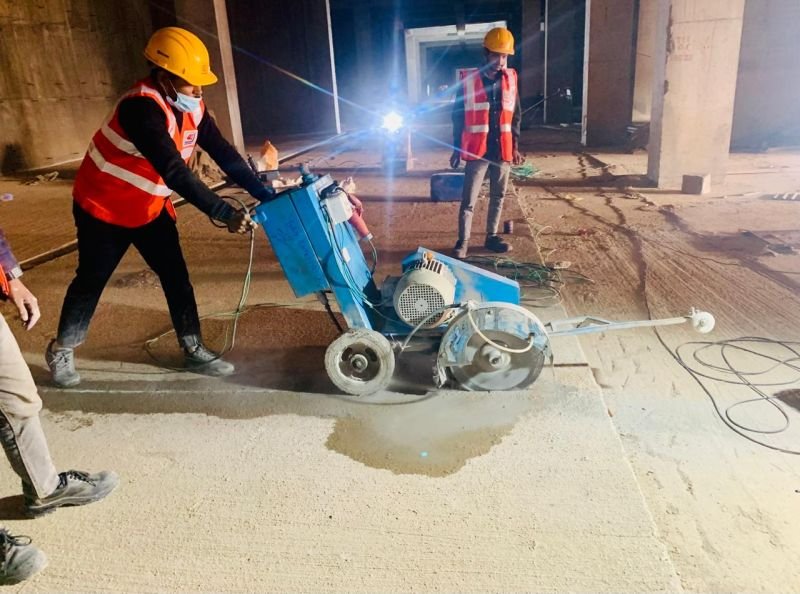
Diamond saw cutting lets concrete be cut exactly where it is marked — control joints in a new floor, openings in an existing slab, trenches for services — without the vibration, noise and collateral damage of breaking. We carry out concrete floor cutting and RCC slab cutting on new and occupied sites.
Water getting into a building damages finishes, stock and, in time, the structure itself. We provide waterproofing for terraces, roofs, basements, wet areas and water tanks on industrial and commercial buildings — and every job starts with finding out where the water is really coming from.
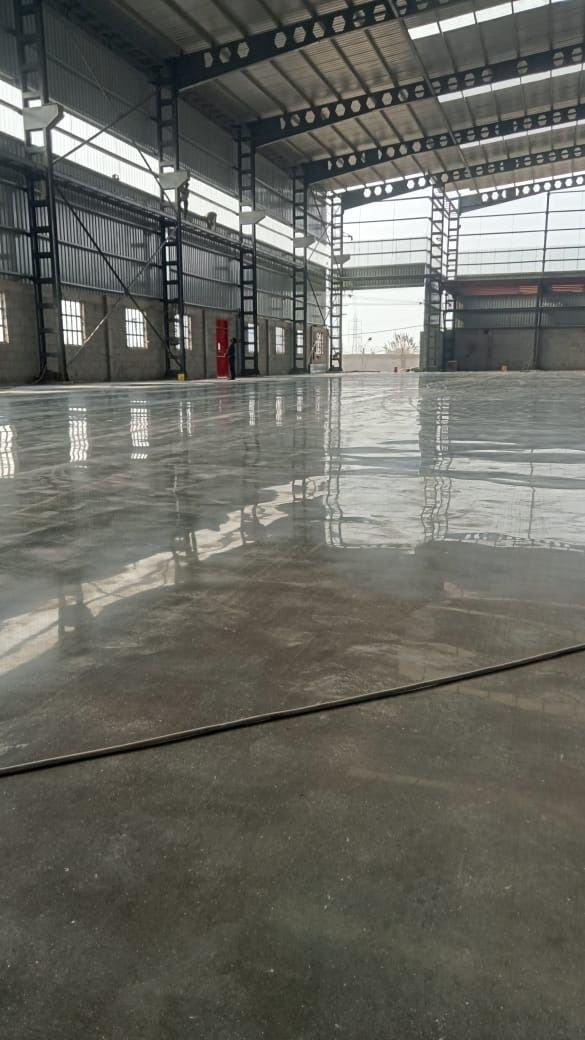
Epoxy flooring bonds a resin system to a prepared concrete slab to create a seamless, hard-wearing surface that resists chemicals and is easy to clean. We prepare and install epoxy floors for factories, warehouses, pharmaceutical and food facilities, and commercial spaces.

Jointless concrete floors are industrial floors cast in large panels — typically with steel fibre reinforced concrete (SFRC) — so that the usual grid of sawn joints is replaced by a few armoured construction joints. Fewer joints means fewer edges to crack and spall, less maintenance, and smoother travel for forklifts.
Vacuum dewatering flooring — known on Indian sites as VDF or Tremix flooring — is the standard way to build hard-wearing concrete floors for warehouses, factories and industrial sheds. We place, dewater, float and trowel VDF floors for industrial and commercial projects from our base at SIDCUL, Haridwar.
Describe the floor and how it is used. We will recommend the right system and quote after a site assessment.